High caffeine coffee has gained traction as people look for stronger, more reliable energy without relying on sugary energy drinks or multiple cups of standard coffee. At face value, the idea is simple. More caffeine equals more energy. In practice, the relationship between caffeine dose and performance is far more complex. How caffeine is delivered, how quickly it is absorbed, and what accompanies it determine whether high caffeine coffee feels productive or overwhelming.
One of the biggest misconceptions around high caffeine coffee is that higher dose automatically leads to better focus and output. Research shows that while moderate increases in caffeine can improve alertness and reaction time, excessive or rapidly absorbed caffeine can impair concentration by increasing anxiety, restlessness, and cognitive noise. Past a certain point, stimulation begins to work against sustained attention rather than supporting it.
Many high caffeine coffees on the market rely on aggressive roasting techniques or caffeine additives that prioritize speed of onset over control. These products often produce a sharp spike in stimulation followed by a noticeable drop as adenosine signaling rebounds. This pattern can create a cycle of repeated consumption, where users chase the initial lift but experience diminishing returns throughout the day.
Another issue is tolerance. High caffeine intake accelerates the body’s adaptation to stimulants. As tolerance increases, the same dose produces less noticeable effect, pushing users toward even higher intake. This escalation can lead to disrupted sleep, elevated baseline fatigue, and reduced sensitivity to caffeine’s benefits. Over time, high caffeine coffee used without strategy can reduce overall energy rather than improving it.
High caffeine coffee also varies significantly in how it affects the nervous system. Caffeine absorbed too quickly can overstimulate the sympathetic response, increasing heart rate and stress signaling. This is why some people feel wired but unfocused after strong coffee. Effective high caffeine formulations consider absorption rate and nervous system balance, not just milligram count.
From a performance perspective, the most effective high caffeine coffee focuses on sustaining alertness rather than maximizing intensity. Layered caffeine sources that absorb at different rates can extend energy without overwhelming the system. This approach maintains mental clarity and reduces the likelihood of crashes. It also makes caffeine more usable across longer work or training sessions.
The role of complementary ingredients is often overlooked in discussions of high caffeine coffee. Compounds that support calm focus, neurotransmitter balance, and stress regulation can significantly improve how caffeine feels. Research shows that pairing caffeine with ingredients that reduce overstimulation can improve task performance compared to caffeine alone. This does not reduce potency. It refines it.
High caffeine coffee also raises questions about health impact. When delivered without sugar, artificial sweeteners, or excessive acidity, caffeine itself is generally well tolerated in healthy adults. Problems arise when high caffeine is paired with ingredients that destabilize blood sugar, irritate the gut, or disrupt sleep patterns. The formulation context matters as much as the caffeine dose.
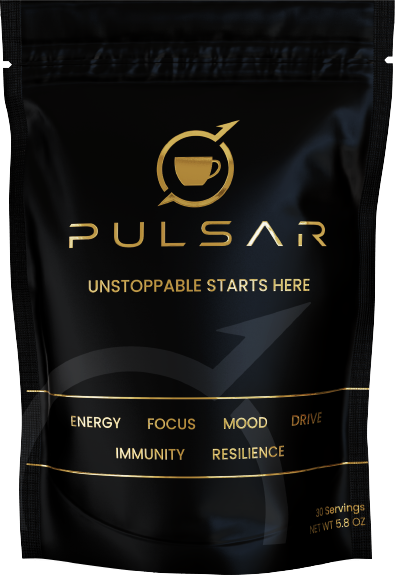
PULSAR approaches high caffeine coffee with this context in mind. Rather than pushing caffeine to extremes, it uses multiple caffeine sources and supportive ingredients to create strong but controlled energy. The goal is not to overwhelm the system, but to deliver alertness that remains stable, focused, and repeatable throughout the day. High caffeine is treated as a tool, not a blunt instrument.
Ultimately, high caffeine coffee is not inherently good or bad. Its effectiveness depends on how intelligently it is designed and how intentionally it is used. When formulation prioritizes absorption control, nervous system balance, and long term sustainability, high caffeine coffee can be a powerful performance aid. When it prioritizes shock value and intensity alone, it often becomes another source of fatigue disguised as energy.