Mushroom coffee has surged in popularity over the past few years, largely driven by growing interest in functional foods and alternative wellness products. Marketed as a cleaner, calmer upgrade to traditional coffee, mushroom coffee blends promise benefits ranging from improved focus to immune support and reduced anxiety. These claims have resonated with people looking for healthier energy options, but the rapid rise of the category has also created confusion about what mushroom coffee actually delivers and where marketing often runs ahead of evidence.
At its core, mushroom coffee is typically a blend of coffee or coffee extracts combined with powdered medicinal mushrooms. The most common mushrooms used include Lion’s Mane, Cordyceps, Chaga, and Turkey Tail. Each of these mushrooms has a history of use in traditional medicine and a growing body of modern research exploring potential benefits. However, the presence of mushrooms alone does not guarantee meaningful effects. Outcomes depend heavily on dosage, extraction method, mushroom quality, and how the blend is formulated.
Much of the hype around mushroom coffee centers on cognitive enhancement and stress reduction. Lion’s Mane, for example, is frequently associated with brain health due to research suggesting it may support nerve growth factors. Cordyceps is often linked to energy and endurance, while Turkey Tail is commonly discussed in the context of immune support. These associations are rooted in legitimate research, but the effects observed in studies often require specific extract concentrations and consistent use over time. Many commercial products include these mushrooms at levels that are unlikely to reproduce the outcomes consumers expect.
Another major source of confusion is the expectation that mushroom coffee should replace caffeine-driven energy entirely. Many mushroom coffee products significantly reduce or eliminate caffeine, positioning this as a benefit. For some individuals, lower stimulation may feel smoother, but for others it results in noticeably weaker energy and reduced productivity. This tradeoff is rarely discussed clearly. Reduced caffeine can mean fewer jitters, but it can also mean diminished alertness, especially for people accustomed to coffee for mental performance.
Taste and experience also play a role in the disconnect between promise and reality. Many mushroom coffee blends sacrifice flavor in favor of functional positioning, resulting in earthy or bitter profiles that do not resemble coffee in any meaningful way. This creates a gap between expectation and use. Products marketed as coffee alternatives often fail to deliver the sensory and functional experience people associate with coffee, which limits long-term adoption regardless of perceived health benefits.
The reality is that medicinal mushrooms are not inherently incompatible with coffee. The issue is formulation philosophy. Many brands treat mushrooms as the primary feature and coffee as an afterthought, leading to weak stimulation and compromised taste. Others lean heavily on branding and wellness language while offering minimal transparency about extract ratios, sourcing, or bioavailability. This has fueled skepticism around whether mushroom coffee is genuinely effective or simply well marketed.
Scientific support for functional mushrooms exists, but it is nuanced. Benefits are typically subtle, cumulative, and dependent on quality extracts derived from fruiting bodies rather than fillers or mycelium grown on grain. Extraction ratios matter. Standardization matters. Without these factors, mushrooms function more as labels than as active components. Consumers rarely see these details highlighted, even though they largely determine whether a product delivers measurable value.
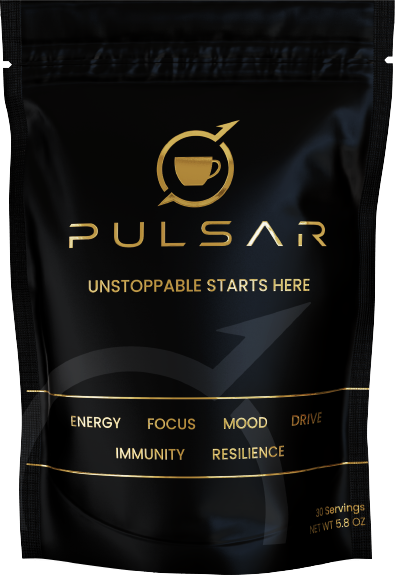
PULSAR approaches mushrooms differently by treating them as supportive components rather than headline replacements for caffeine. Instead of eliminating coffee’s stimulatory role, PULSAR integrates mushrooms that have the strongest scientific backing into a formulation designed for performance. Lion’s Mane and Turkey Tail are selected based on research density and long-term health relevance, not trend appeal. They are included alongside caffeine sources rather than positioned as substitutes for them.
This approach reflects a broader distinction between wellness marketing and performance-driven design. Mushroom coffee is often sold as a lifestyle signal, emphasizing calm, balance, and ritual. That framing appeals to certain audiences but does not always serve people who need reliable focus, motivation, and output. When mushrooms are combined with appropriate stimulation and supportive compounds, they can contribute to a more complete performance profile rather than acting as a symbolic ingredient.
Ultimately, mushroom coffee is neither a miracle nor a gimmick by default. It is a category shaped by formulation choices, transparency, and realistic expectations. Functional mushrooms have legitimate potential when used at effective doses and within thoughtfully designed blends. The challenge is separating evidence-based applications from marketing narratives. For those evaluating mushroom coffee as an energy or focus tool, the most important question is not whether mushrooms are included, but how and why they are used.